
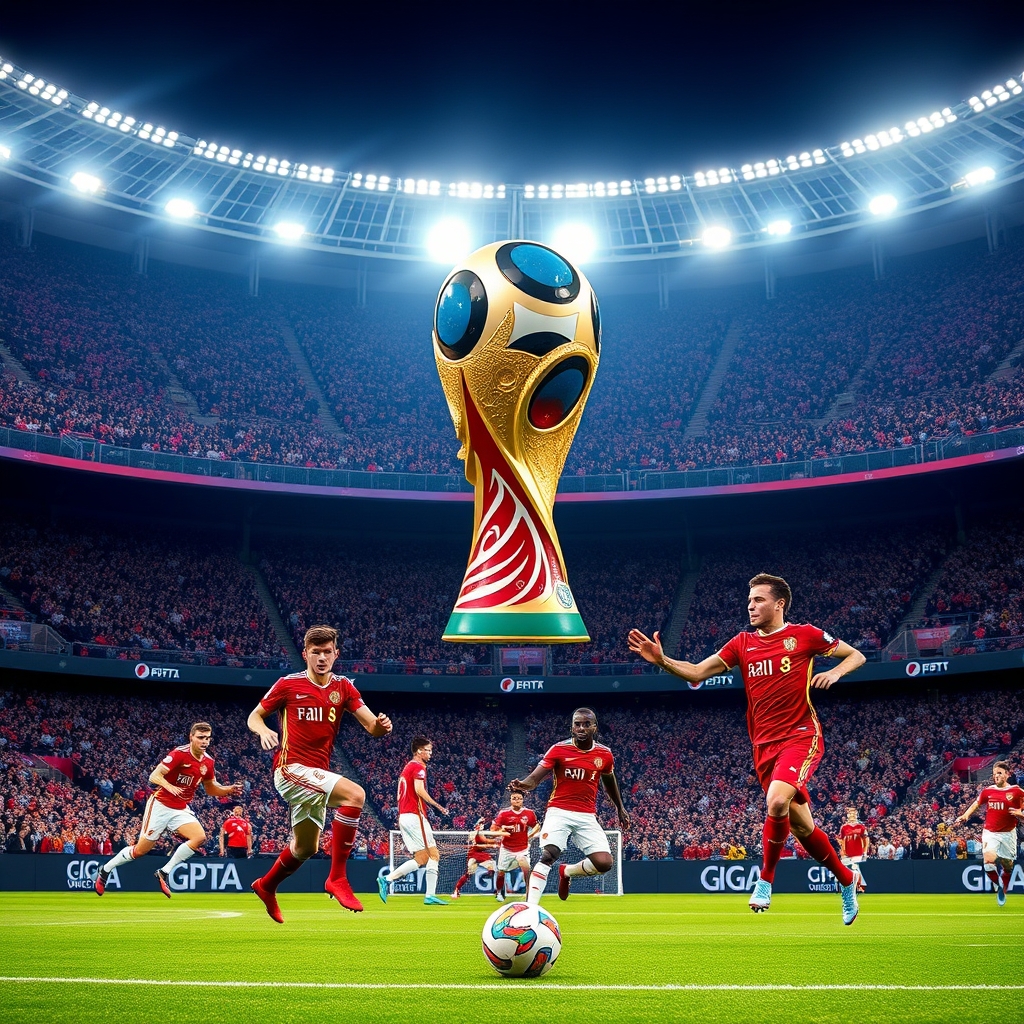
Great stories, little jeopardy does the new World Cup format work?
The FIFA World Cup 2026 has ushered in a new era for international football. For the first time in the tournament’s history, 48 nations are competing for the world’s biggest prize, giving more countries than ever before the opportunity to experience football’s greatest stage.
The expanded format has undoubtedly produced inspiring stories and historic achievements. However, it has also sparked an important debate among fans, players, coaches, and analysts: Has the new format improved the World Cup, or has it reduced the drama that made the tournament so special?
While the competition has delivered unforgettable moments, some believe the expanded structure has also introduced problems that FIFA may need to address in future editions.
More Nations, More Dreams
One of the biggest successes of the new format is inclusion.
Countries that previously struggled to qualify have finally had the chance to compete against football’s traditional giants. Nations like Cape Verde have become symbols of what the expanded World Cup can achieve, proving that smaller footballing nations deserve a place on the global stage.
For millions of supporters, simply seeing their national team participate in the World Cup is a dream come true.
The tournament has become more representative of football’s worldwide popularity, showcasing talent from every continent.
Underdog Stories Have Captivated the World
The expanded tournament has created more opportunities for surprise results.
Several smaller nations have exceeded expectations by earning historic victories, frustrating stronger opponents, and reaching the knockout rounds for the first time.
These stories remind fans why the World Cup is unlike any other sporting event. Every four years, unknown players become national heroes, and countries with limited football history suddenly capture global attention.
The emotional impact of these underdog stories has been one of the tournament’s greatest strengths.
Has the Group Stage Lost Some Tension?
Despite the positive stories, the new format has also raised concerns.
With more teams progressing beyond the group stage, some final group matches have lacked urgency. In several cases, teams knew that a draw would be enough to qualify, leading to cautious tactical approaches rather than attacking football.
Supporters expect World Cup matches to be played with maximum intensity, but some fixtures have felt more focused on avoiding defeat than chasing victory.
Critics argue that qualification has become slightly easier, reducing the pressure that previously defined every group-stage game.
Too Many Qualification Scenarios
Another challenge has been the complexity of the standings.
Supporters have often needed to follow multiple matches simultaneously while calculating goal difference, head-to-head records, fair play points, and third-place rankings.
Although this has created suspense, it has also made the tournament more difficult for casual fans to follow.
Instead of simple qualification battles, many groups have ended with complicated mathematical scenarios that confused even experienced supporters.
The Knockout Stage Benefits
Where the new format truly shines is the knockout stage.
More teams mean more elimination matches, giving fans additional high-quality football and more opportunities for dramatic moments.
Every knockout game carries enormous pressure, and the expanded field has introduced fresh matchups between nations that rarely meet in major tournaments.
The diversity of opponents has added excitement and unpredictability to the competition.
More Football for the Global Audience
The 48-team World Cup has also expanded football’s global reach.
More participating nations mean greater television audiences, increased commercial opportunities, and stronger investment in football development across emerging countries.
For FIFA, the expansion represents not only sporting growth but also a chance to strengthen football worldwide.
Many smaller federations now have realistic ambitions of qualifying for future tournaments, encouraging greater investment in youth development and infrastructure.
Areas FIFA Could Improve
While the expansion has delivered many positives, several adjustments could improve future tournaments.
Possible improvements include:
- Making qualification scenarios easier to understand.
- Encouraging more attacking football in the final group matches.
- Reviewing rules that allow teams to qualify comfortably with cautious performances.
- Increasing transparency around tie-breakers and qualification rankings.
- Ensuring every final group-stage match has meaningful sporting consequences.
These changes could preserve the excitement while maintaining the benefits of expansion.
Final Verdict
The 48-team FIFA World Cup is neither a complete success nor a failure—it is an evolution.
It has given millions of supporters unforgettable memories, introduced inspiring new nations to the global stage, and demonstrated football’s incredible worldwide growth. At the same time, it has exposed weaknesses in the group-stage structure, with some matches lacking the jeopardy and intensity that have traditionally defined the World Cup.
Ultimately, the tournament proves that expansion can work, but refinement is still needed. If FIFA can preserve the inspiring underdog stories while increasing competitive tension, the new format has every chance of becoming the foundation for an even greater World Cup in the years to come.